Orthodox Spirituality
Hesychasm, the prayer of the heart and the theology of the icon: the Christian tradition of the East
"The Jesus Prayer is the breath of the spirit, the beat of the spiritual heart"
The Prayer of the Heart
Hesychasm (from Greek ἡσυχία, "stillness") is the great contemplative tradition of Christian East. Born in the Egyptian desert with the Desert Fathers, it developed on Mount Athos and reached its definitive theological formulation with Gregory Palamas in the 14th century.
At the heart of hesychasm is the Jesus Prayer: "Lord Jesus Christ, Son of God, have mercy on me a sinner." A short, unceasing prayer, synchronized with breath and heartbeat, until it becomes the breath of the soul.
The Face of the Divine
The icon is not a simple religious image: it is a window onto eternity, a visible theophany. The Orthodox theology of the icon, developed by thinkers like Florenskij and Evdokimov, affirms that the icon is a real participation in the reality it represents.
The golden light of the icon's background is not physical light: it is the uncreated light of God, the same light of Tabor that the disciples saw at the Transfiguration. To contemplate an icon is to enter into contact with that light.
Masters of the Eastern Tradition
From Origen to the great thinkers of the 20th century
Father of Christian speculative theology. Developed the allegorical reading of Scripture and the doctrine of contemplative prayer as the soul's ascent to God.
Father of Eastern monastic spirituality. Systematized the interior life in three stages: praktikē, physikē, theologikē — purification, contemplation of nature, vision of God.
Father of Egyptian monasticism. His Spiritual Homilies describe the mystical experience of the heart as the place of encounter with God.
Abbot of Mount Sinai. His Ladder of Divine Ascent describes the 30 steps of spiritual ascent, becoming the classic manual of Eastern monastic life.
Archbishop of Thessaloniki. Defended the reality of mystical experience against Barlaam of Calabria, distinguishing between the inaccessible essence of God and his uncreated energies, participable by man.
Russian priest, mathematician and philosopher. Martyr under Stalin. In The Royal Doors and The Pillar and Ground of the Truth he developed a theology of beauty as revelation of the divine.
Russian Orthodox theologian emigrated to France. In The Art of the Icon he showed that the icon is the privileged place of God's revelation in transfigured matter.
Anonymous Russian pilgrim of the 19th century. His The Way of a Pilgrim is the most vivid document of the practice of the Jesus Prayer in the Russian hesychast tradition.
Foundational Works
Essential texts to enter into Orthodox spirituality
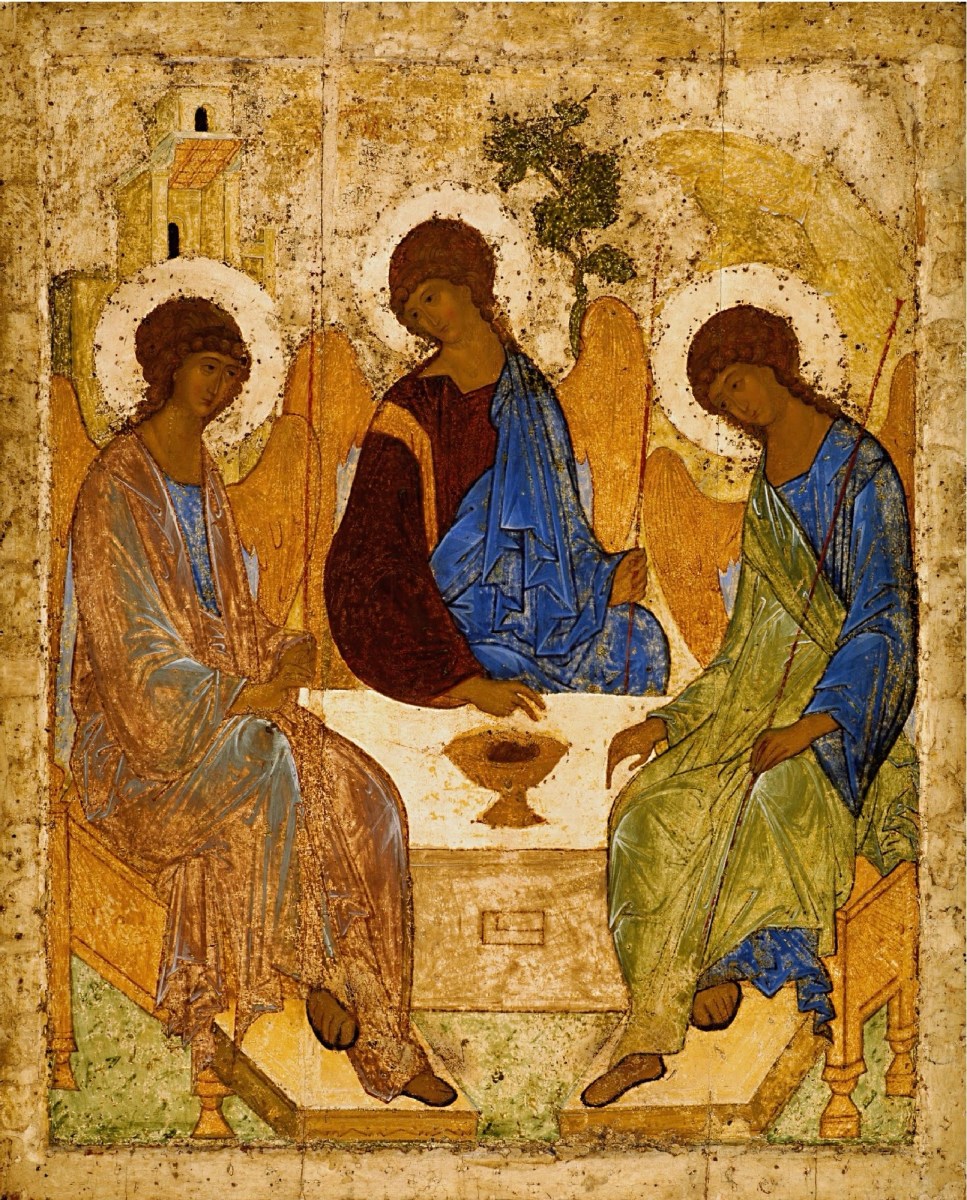
Beauty Will Save the World
Pavel Evdokimov
Theology of the Icon. The beauty of the icon as revelation of God: transfiguration of the visible into the invisible.
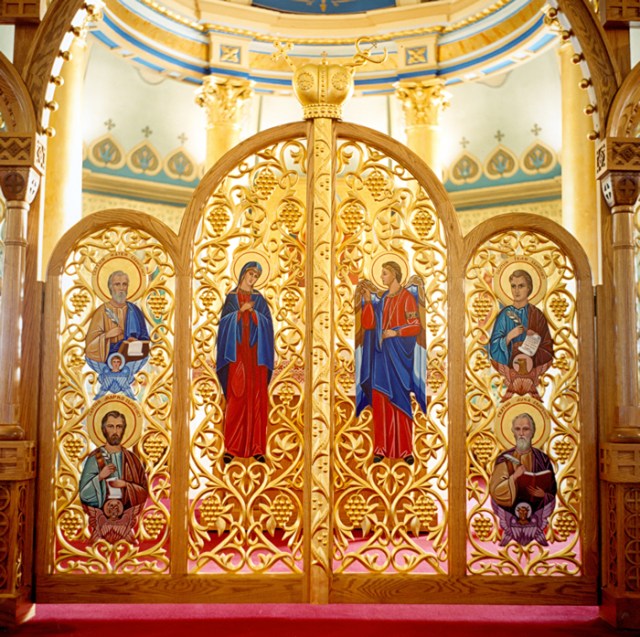
The Royal Doors
Pavel Florenskij
Essay on the iconostasis as an ontological threshold between the visible world and the angelic world.
The Cloud of Unknowing
Anonymous, 14th century
Only a naked impulse of love can pierce the cloud of unknowing and touch the divine essence.
The Way of a Pilgrim
Anonymous, 19th century
The Jesus Prayer as the incessant breath of the heart: the most vivid document of Russian hesychasm.
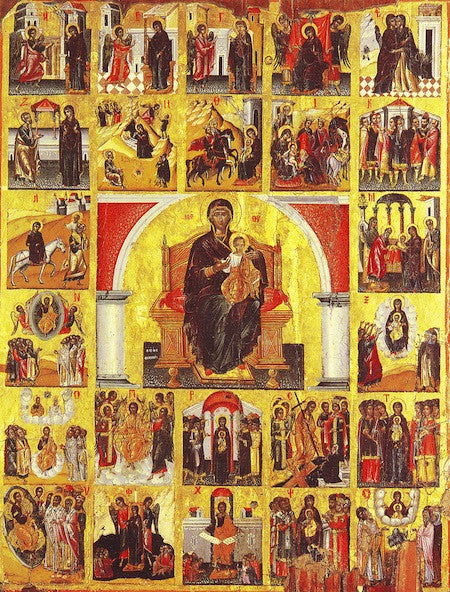
The Akathistos Hymn — Complete Package
Eastern liturgical tradition (5th century)
The most celebrated Marian hymn of the Eastern Church: 24 acrostic stanzas dedicated to the Theotokos. Complete package: Italian text PDF, Patristic Sources PDF, Greek-Italian bilingual PDF, ZIP with audio.
In-Depth Articles
Articles dedicated to the Eastern spiritual tradition
Gregorian Chant: Voice of the Church's Soul
Gregorian chant is the music the Church chose as its own voice for over a millennium. It is not just music: it is sung prayer, sonic meditation, an encounter with the sacred through sound. Why does this music continue to touch the soul?
Read article →The Church Fathers: Foundations of Faith
Augustine, Ambrose, Jerome, John Chrysostom — these giants of Christian thought shaped theology, spirituality, and Western culture. To know them is to rediscover the deepest roots of Christian civilization.
Read article →The Way of a Pilgrim — The Jesus Prayer
A nameless pilgrim walks through the Russian steppes with the Bible and the Philokalia, learning the Jesus Prayer until it becomes the unceasing breath of his heart. First edition: Kazan, 1881.
Read article →Gregorian Chants of Easter — The Abbey of Casamari and the Cistercian Tradition
The Cistercian Abbey of Casamari preserves one of Italy's most vibrant Gregorian chant traditions. 17 chants from the Paschal Triduum: from the Exultet to the Easter Vigil Alleluia, from the Victimae Paschali Laudes to the Improperia of Good Friday. The most ancient voice of the Church.
Read article →Sacred Art — Complete Collection: Five Foundational Works
From Byzantine iconography to Christian archaeology in Palestine: Ravegnani, Bagatti, Boespflug, Byzantine Dossier and Icons — The Great Journey in one ZIP at €10.
Read article →"Beauty will save the world"